Polyvinyl Chloride (PVC): Cable Insulation Properties
Polyvinyl chloride (PVC) insulation is a common wire and cable insulation material with the advantages of low cost, good insulation performance, corrosion resistance, and easy processing.
PVC insulation usually uses additives such as plasticizers and stabilizers to improve its flexibility and weather resistance to meet different application requirements. PVC insulated wire and cable can be constructed and shielded in different ways to meet the requirements for insulation performance, corrosion resistance, and mechanical strength of wire and cable according to different usage occasions and requirements.
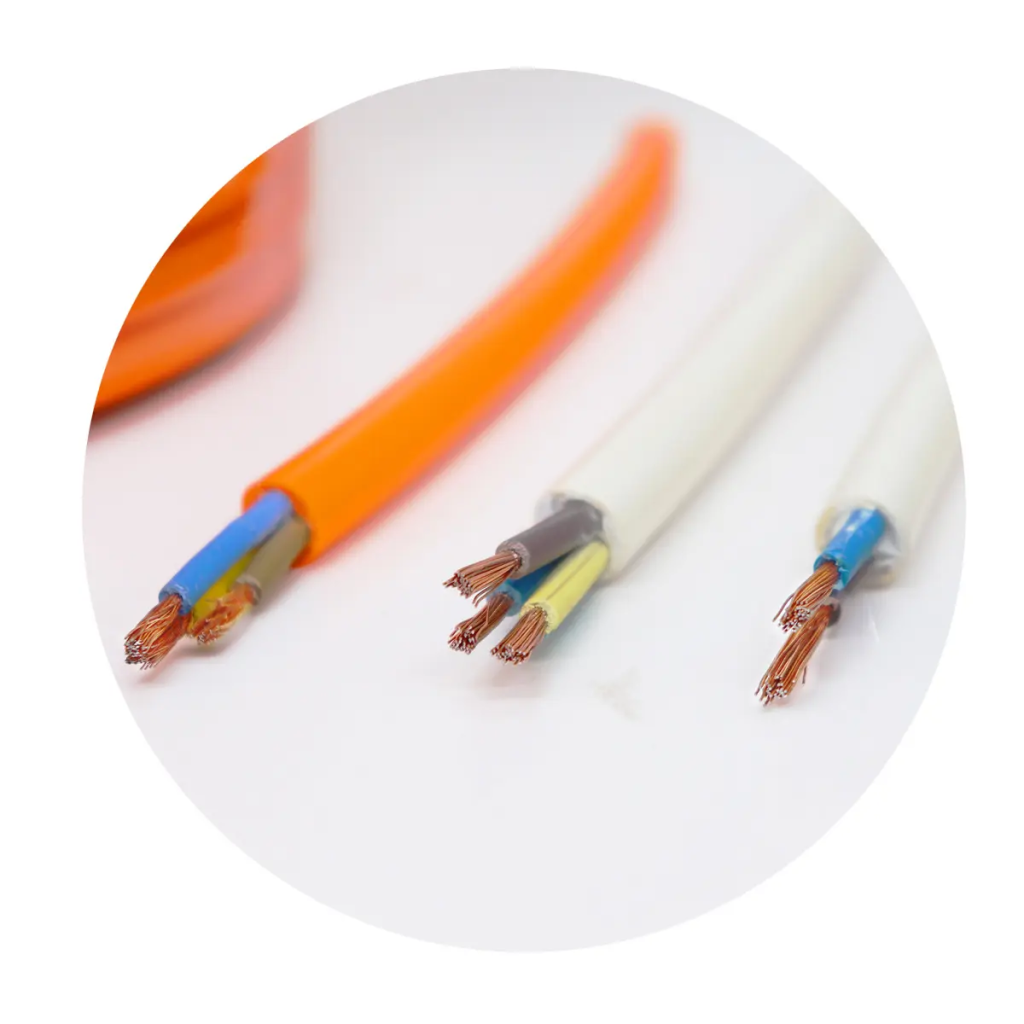
PVC insulated wire and cable has the advantages of low cost, good insulation performance, corrosion resistance and easy processing, and is widely used in the fields of low-voltage wire and cable and communication cable. However, the performance of PVC-insulated wire and cable may be affected in harsh environments such as high temperature and high humidity. Therefore, attention needs to be paid to the use environment and requirements of PVC-insulated wire and cable when selecting and applying them to ensure their stable and reliable operation.
Polyvinyl chloride can be made from ethylene, chlorine and catalyst by substitution reaction. Because of its fire and heat resistance, PVC is used in a wide variety of products in a wide range of industries: wire casings, fiber optic casings, shoes, handbags, bags, ornaments, signs and billboards, architectural decorations, furniture, hangings, rollers, pipes, toys, door curtains, roll-up doors, medical aids, gloves, fresh paper for certain foods, certain fashions, etc.
Polyvinyl chloride is yellowish and translucent with a luster. Its transparency is better than polyethylene and polypropylene, and worse than polystyrene. It is divided into soft and hard polyvinyl chloride with different amount of additives, soft products are soft and tough, and feel sticky, hard products are harder than low-density polyethylene, but lower than polypropylene, and whitening occurs at the flexure. Stable; not easily corroded by acids and alkalis; more resistant to heat. PVC has the advantages of flame retardancy (flame retardancy value of 40 or more), high chemical resistance (resistant to concentrated hydrochloric acid, sulfuric acid at a concentration of 90%, nitric acid at a concentration of 60% and sodium hydroxide at a concentration of 20%), good mechanical strength and electrical insulation. Polyvinyl chloride is less stable to light and heat. The softening point is 80°C, and decomposition begins at 130°C. Without heating the stabilizer, PVC starts to decompose at 100℃, and decomposes faster above 130℃. Decomposition by heat releases hydrogen chloride gas (hydrogen chloride gas is a toxic gas), which causes it to change color from white → light yellow → red → brown → black. Ultraviolet light and oxygen in sunlight will make PVC decompose by photo-oxidation, thus making PVC less flexible and finally brittle. This is the reason why some PVC plastics become yellow and brittle after time. It has stable physicochemical properties, insoluble in water, alcohol and gasoline, and low gas and water vapor permeability; it is resistant to any concentration of hydrochloric acid, sulfuric acid up to 90%, nitric acid 50-60% and caustic soda solution up to 20% at room temperature, and has certain chemical resistance; it is quite stable to salts, but can dissolve in organic solvents such as ether, ketone, chlorinated aliphatic hydrocarbons and aromatic hydrocarbons. Industrial PVC resins are mainly amorphous, but also contain some crystalline areas (about 5%), so PVC does not have an obvious melting point and starts to soften at about 80°C. The heat deflection temperature (under 1.82 MPa load) is 70-71°C. Under pressure, it starts to flow at 150°C and starts to slowly release hydrogen chloride, causing PVC to change color (from yellow to red, brown, or even black). This causes PVC to change color (from yellow to red, brown or even black).
Enameled wire products can be used in the power industry equipment, our company will participate in the power exhibition every year, visit customers and show products