How High-Power Submersible Motor Cooling Systems Work
The cooling system of a high power submersible motor is designed to effectively reduce the heat generated by the motor and to keep the motor operating within an acceptable temperature range. The following is the general working principle of the cooling system of a high power submersible motor:
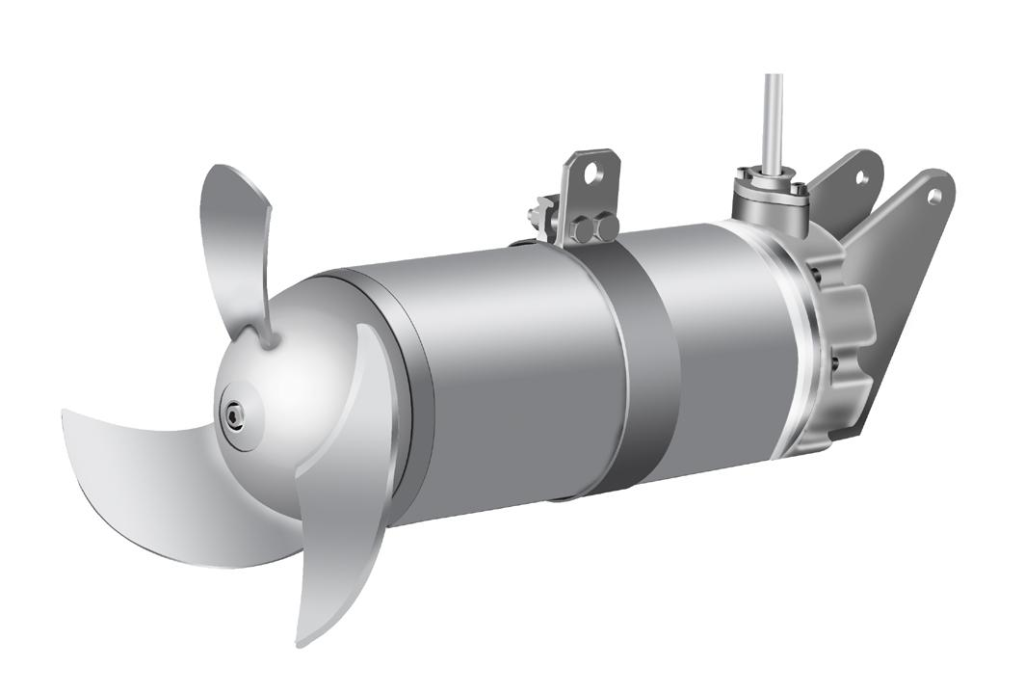
Coolant Circulation System: High-power submersible motors typically utilize a coolant circulation system, similar to a conventional liquid cooling system. The system consists of the following major components:
- Coolant: Water or water-based coolant is typically used as the heat transfer medium. The coolant circulates inside the motor and absorbs the heat generated by the motor.
- Coolant Pump: The coolant pump is responsible for drawing the coolant from the coolant tank or tanks around the motor and delivering it inside the motor.
- Radiator: The radiator is one of the key components of the coolant circulation system. It is usually located on the outside of the motor. Through the radiator’s fins or tubes, the coolant exchanges heat with its surroundings and transfers the heat to the surrounding medium (e.g. water or air).
- Coolant piping: The coolant is connected to the motor, coolant pump and radiator through piping to form a closed loop system.
Working Principle: The cooling system of high power submersible motor works as follows:
- The coolant pump extracts the coolant from the coolant tank or water tank and transports it to the inside of the motor through the pipeline.
- The coolant flows inside the motor through the windings, rotor and other heat source parts of the motor and absorbs heat.
- The high-temperature coolant enters the radiator and radiates the heat to the surroundings through heat exchange with the surrounding medium, such as water or air.
- After cooling in the radiator, the coolant is again extracted by the coolant pump and re-enters the inside of the motor, forming a cycle.
Auxiliary heat dissipation: In addition to the coolant circulation system, the heat dissipation system of high-power submersible motors can sometimes use other auxiliary heat dissipation methods to enhance the heat dissipation effect. For example:
- Heat dissipation fan: install a fan on the radiator to increase air flow and improve heat dissipation efficiency through forced convection.
- Heat dissipation heat exchanger: add heat exchanger in the coolant circulation system, heat exchange between the coolant and other media (such as seawater) to further improve the heat dissipation effect.
The design of the heat dissipation system for high power submersible motors needs to be optimized according to the specific power, environmental conditions and operational requirements. Ensure that the heat dissipation system can effectively reduce the temperature of the motor, prevent overheating causing motor failure, and ensure stable operation of the motor.