Waterproof Cable Materials: Longitudinal and Radial Water Blocking
Waterproof cable material is a special cable material, with excellent waterproof performance and heat resistance, for single-core cable, in the insulation shield layer wrapped around the half-conducting resistance water tape, outside the metal shield wrapped around the ordinary water resistance tape, and then extruded outer sheath, outer sheath material can be ordinary PVC, can also be used with radial water resistance HDPE material, depending on the other performance requirements of the cable. For three-core cable, in order to ensure full contact with the metal shield, only outside the insulation shield wrapped around the single conductor resistance water tape, metal shield outside no longer around the water resistance tape, depending on the level of waterproof performance requirements, filling can be used to fill the ordinary filling or water resistance filling, lining layer and outer sheath material with single-core cable.
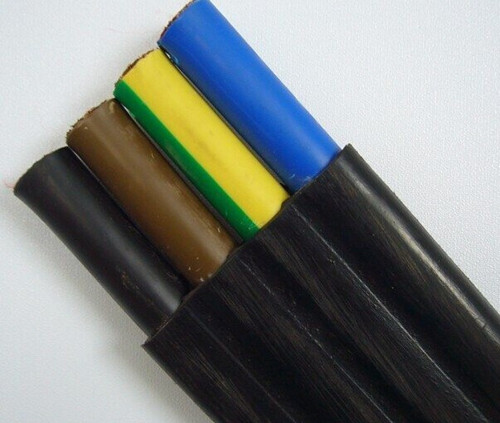
Extrusion of HDPE sheath directly on the outside of the cable
For XLPE insulated cables above 110kV level, the metal sheath is mainly used to make the cable waterproof. The most important feature of the metal sheath is that it is completely impermeable, so the Nanyang cable with metal sheath has a very good radial water resistance performance. The main types of metal sheath are: hot pressed aluminum sheath, hot pressed lead sheath, welded wrinkled aluminum sheath, welded wrinkled steel sheath, cold drawn metal sheath, etc.
1. Insulation material: waterproof cable material insulation materials need to have good waterproof performance and heat resistance, can ensure that the cable in the wet environment from moisture erosion, while being able to withstand high and low temperatures. Generally speaking, waterproof cable material insulation materials are mainly polyethylene, cross-linked polyethylene (XLPE), cross-linked polyvinyl chloride (XLPE), etc.
2. sheath material: waterproof cable material sheath material also needs to have good waterproof performance and heat resistance, can protect the cable internal insulation layer and conductor from moisture erosion. Commonly used sheath materials are polyvinyl chloride (PVC), cross-linked polyethylene (XLPE), polyurethane (PU) and so on.
3. Environmental factors: When choosing waterproof cable material, you need to consider the environmental factors in which the cable is located, such as temperature, humidity, chemical substances, etc. Different environmental factors have different performance requirements for cable materials, and you need to choose a waterproof cable material that meets the requirements. Choose the right waterproof cable material need to consider the above factors, according to the specific application requirements and standard regulations to determine the appropriate type of cable material and specifications, in order to ensure the quality and safety of the cable.