Motor Winding Dipping Paint: Purpose and Common Methods
1、Improve the heat resistance and thermal conductivity of the winding insulation.
Before dipping paint winding insulation gap filled with air, poor thermal conductivity. After dipping paint insulating paint filled all the gaps of the winding insulation, thermal conductivity greatly enhanced. Paint dipping parts of the formation of paint film, reducing the contact with the air, slowing down the oxidation process, but also improve the heat resistance.
2, improve the electrical properties of the winding insulation
After dipping paint, the winding turns, phase and the insulation layer and the gap between the insulating material are filled with insulating paint, basically eliminating the air bubbles, the formation of a strong solid insulation, thus improving the electrical properties of the winding insulation.
3、Improve the moisture resistance and chemical stability of the winding insulation
Before dipping paint, moisture and water will make the insulation material aging, performance deterioration. After dipping paint, the insulating paint will fill the capillaries and gaps of the insulating material, and form a layer of smooth paint film, so that moisture and water are not easy to invade, dust and corrosive gases can not be in direct contact with the winding. And after special dipping paint treatment of the winding insulation, also has the ability to prevent dew, corona, corrosion and oil pollution.
4、Improve the mechanical strength of the winding
After dipping paint, each wire of the winding is bonded into a solid whole, which strengthens the mechanical strength of the winding and reduces the loosening and wear of the insulation caused by electromagnetic force, vibration and thermal expansion and contraction.
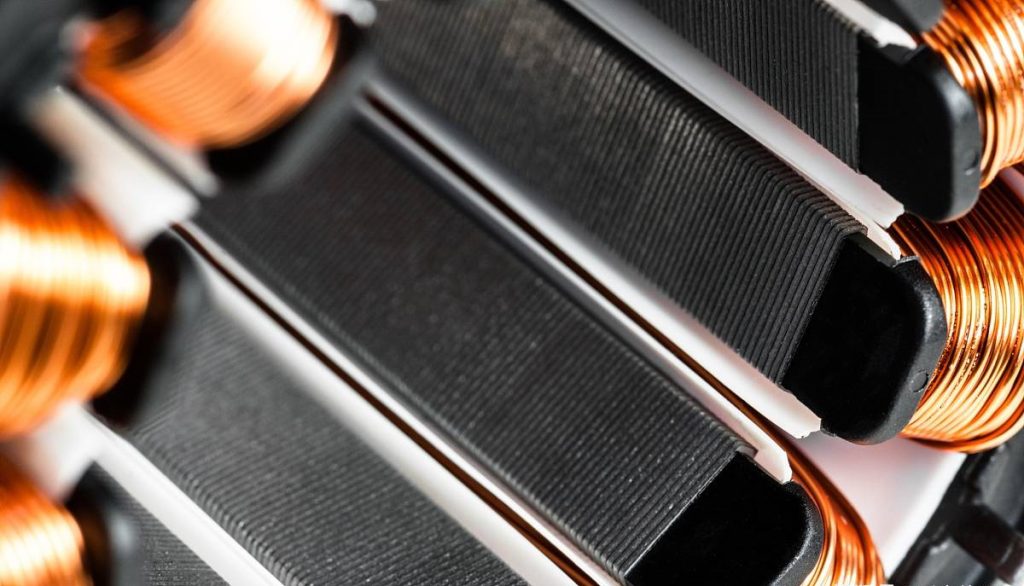
Methods of motor winding dipping paint
1、Pouring and dipping
Repair single motor winding dipping paint can be practiced pouring dip. When pouring and dipping, place the stator vertically on the paint dripping plate, with one end of the winding upward, and pour paint to the upper end of the winding with paint pot or paint brush. To be winding gap filled with paint and began to seep out from the other end of the gap, the stator will be turned over, pouring the other end of the winding. Until poured through. Sporadic repair of small motors, the use of this method can reduce the waste of insulating paint.
2、Drop dipping
This method is suitable for small and medium-sized motor dipping paint treatment. Lack of specialized equipment can be used in the unit of manual drip paint process. The following describes a small motor windings for dipping paint treatment commonly used drop paint process.
① formula. 6101 epoxy resin (quality ratio), tung oil maleic anhydride 50%, now with now.
② preheating. In the winding in the electric heating for about 4min, the temperature is controlled between 100 ~ 115 ℃ (measured with a point thermometer), or the winding is placed in the drying furnace heating about 0.5h.
③Drop dipping. Place the motor stator vertically on the paint plate, when the motor temperature drops to 60 ~ 70 ℃ when the start of hand-dripping paint, 10min later, the stator will be turned over, drip dipping the other end of the winding, until poured through.
④Curing. After drip dipping, the winding is energized and cured, the temperature of the winding is maintained at 100-150 ℃; measure the insulation resistance value is qualified (20MΩ), or the winding is placed in the drying furnace heating, the same temperature as above, the time is about 2h (depending on the size of the motor), the insulation resistance is more than 1.5MΩ out of the furnace.
3、Rolling paint
This method is applicable to the rotor or armature winding dipping paint treatment. When rolling paint, pour insulating paint into the paint tank, place the rotor in the paint tank, the paint surface should be submerged rotor winding more than 200mm. If the paint tank is too shallow, the rotor winding dipped on the paint area is small, it should be several times to roll the rotor, or while rolling the rotor while using a brush to paint. Usually rolling 3 to 5 times, you can make the insulating paint immersion insulation.
4、Immersion
When repairing small and medium-sized motors in batch, the winding can be immersed in paint. Immersion, first to the paint tank into the appropriate amount of insulating varnish, and then lifted into the motor stator, so that the paint submerged stator more than 200mm. To wait for the paint to soak through all the gaps in the winding and insulating paper, the stator will be lifted to drip paint. If you add 0.3 ~ 0.5MPa pressure when dipping paint. The effect is better.
5、Vacuum pressure dipping
High-voltage motors, as well as small and medium-sized motors with high insulation quality requirements, the windings can be vacuum pressure dipping paint. When dipping paint, the stator of the motor is placed in a closed paint container, and vacuum technology is utilized to eliminate moisture. After the winding is dipped in paint, the pressure of 200-700kPa is added to the paint surface, so that the paint penetrates into all the crevices of the winding and the deep pores of the insulating paper, in order to ensure the quality of the dipping paint.
Dipping paint is completed, the stator will be placed on the wire mesh, so that the paint dripping clean, and with a cotton cloth dipped in gasoline will be the stator core surface and the outer surface of the seat of the paint film wiped away, so as not to reduce the air gap and affect the assembly of the rotor.
After drying the winding dipping paint, do not use the wire brush to remove the paint film in the inner cavity of the iron core. Otherwise, the wire brush on the steel wire once broken, there may be a small section of the wire head fell in the core of the slot, especially the wire brush inserted into the edge of the slot wedge, if there is a broken steel wire remains, that is, the use of compressed air can not be blown off, and in the motor operation, the residual steel wire head will be rubbed bad rotor. Therefore, it is prohibited to use wire brush to remove the paint film in the inner cavity of the iron core.


