Electric Motor Performance Requirements for Wire and Cable
Wire and cable product performance requirements, mainly from the use of each specific product, the use of conditions, as well as supporting the relationship between the equipment and so on. In a product of the performance requirements, there are bound to be some of the main, play a decisive role, should be strictly required; some of them are subsidiary, and sometimes some factors are mutually restraining, so it must be comprehensively studied, analyzed and considered in a comprehensive manner.
Motor lead wires is a kind of wire and cable, should have the basic performance including electrical properties, mechanical properties, thermal properties, corrosion resistance, weather resistance and aging resistance, etc., some motor products stator lead wires in the dip baked after the completion of the connection, while some in the stator before the completion of the dip paint; for the first connection after the dip paint process, the cable’s resistance to the dip paint, that is, the corrosion resistance requirements to require a relatively high level of performance; On the contrary, if the motor lead wires in the winding out of the kiln after the completion of the lead wire should not enter the paint and become hard and brittle, the cable insulation skin will not be impregnated with paint interference and damage.
Performance Requirements for Wire and Cable
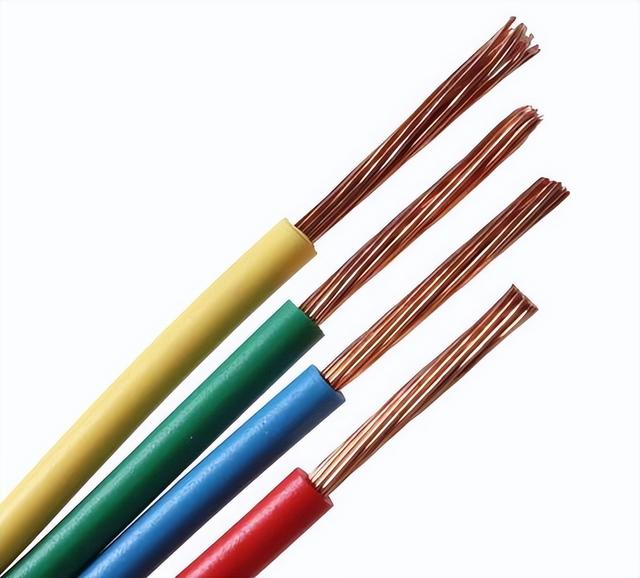
Electrical properties. That is, the conductivity of the cable, cable products require good electrical conductivity, individual products require a certain range of resistance. For motor products, the cable is the key element of the motor winding and the connection of the trailing equipment, requires a good conductivity and electrical insulation properties, electrical insulation properties mainly include its insulation resistance, dielectric coefficient, dielectric loss, electrical resistance characteristics. For special-purpose cables should also have transmission characteristics, that is, the cable’s high-frequency transmission characteristics and anti-interference characteristics.
Mechanical properties. The characteristics mainly include tensile strength, elongation, bending, elasticity, flexibility, vibration resistance, abrasion resistance and resistance to mechanical impact. Motor products with cables and motor windings connected to this line, to appear through the seat hole and terminal board connection, for low-voltage high-power and high-voltage motors, the lead across the number of parts may be a little more, and thus the mechanical properties of the cable and the insulation requirements of a higher number of cables, the cable to implement the necessary protective measures is also very important.
Thermal performance. Refers to the product’s temperature rating, operating temperature power transmission wire and cable heat generation and heat dissipation characteristics, current-carrying capacity, short-circuit and overload capacity, thermal deformability of synthetic materials and thermal shock resistance, thermal expansion of the material, as well as impregnated or coated materials, such as the drop performance. Different motor products should be in accordance with the motor’s heat-resistant grade to select the appropriate lead wires, here to emphasize two points: one is the motor winding temperature rise on the requirements of the lead wires, and the other is the matching relationship between the lead wire current-carrying capacity and the motor current.
Corrosion and weather resistance. Refers to the cable’s resistance to galvanic corrosion, resistance to biological and bacterial erosion, resistance to chemicals (oil, acid, alkali, chemical solvents, etc.) erosion, resistance to salt spray, light, cold, mildew and moisture resistance. For special conditions of the product with the lead wire, should be selected according to the requirements of the motor production and processing process, impregnation resistance is very critical to comply with the performance of most of the motor lead wires with the windings together with the dip paint and drying, and thus the lead manufacturers must be clear about the customer’s product processing and final use of the working conditions, to avoid some unnecessary trouble.
Aging performance. Refers to the mechanical stress, electrical stress, thermal stress and a variety of other external factors, or the role of external climatic conditions, the product and its constituent materials to maintain its original performance capacity. For general-purpose motors, the cause of lead aging is more thermal stress and electrical stress; but for special environmental purposes motor, such as corrosive gases can also lead to premature aging of the lead insulation.
Other properties. Including some of the material properties (such as the hardness of the metal material, creep, polymer material compatibility) and some of the product’s special use of the characteristics (such as non-flammability, resistance to atomic radiation, anti-insect bites, time-delayed transmission, and energy damping, etc.).


