Power Transformer: Function and Role in Electrical Grids
A power transformer is a type of transformer used in power systems, mainly for changing the voltage level of alternating current. It is a key component in the power system for transmission, distribution and conversion of electrical energy. Following are the details about power transformer:
Construction:
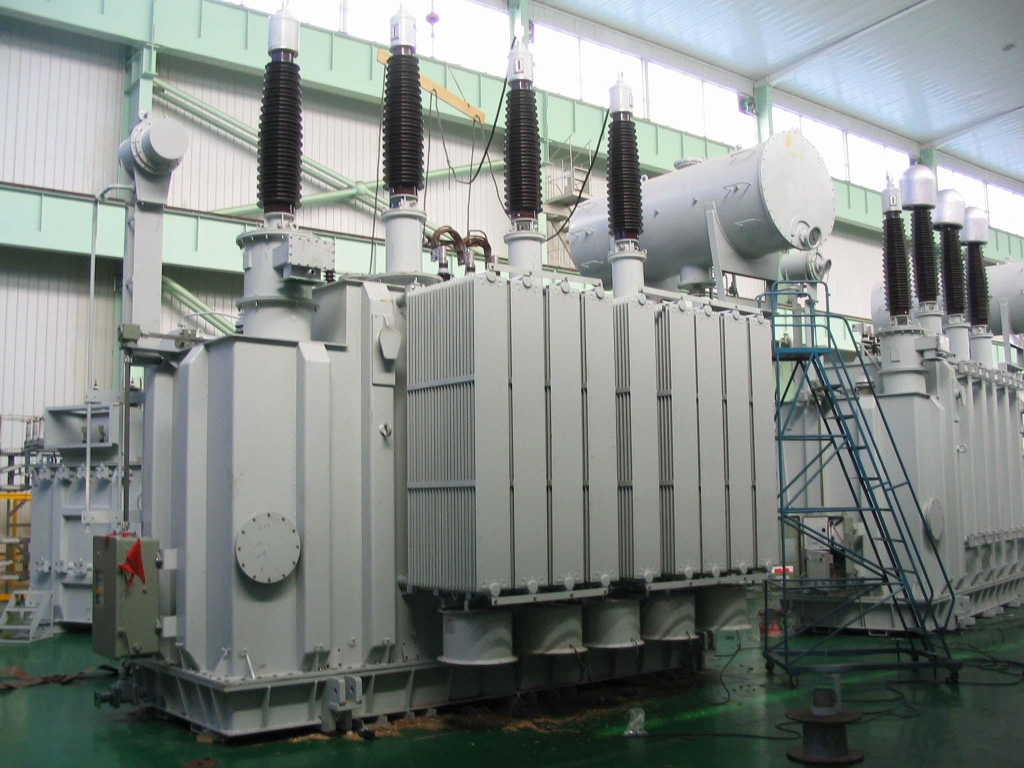
Core : The core of a power transformer is made of highly permeable material (e.g. silicon steel sheet) which conducts the magnetic flux between the coils by providing a low reluctance path.
Coils: A power transformer contains two or more coils, called the main (or primary) and secondary (or secondary) coils. The primary coil is connected to the power side and the secondary coil is connected to the load side. Sometimes one or more auxiliary coils may also be included to provide other functions such as control and protection.
Insulation: Coil winding uses insulating materials (such as insulating paper or insulating enameled wire) to insulate the turns of the coil and protect them from electrical short circuits and
insulation breakdown.
principle of operation:
Transformer ratio: The transformer ratio of a power transformer is determined by the turns ratio of the main coil and the secondary coil. According to the turns ratio, the power transformer can realize the function of step-up (main coil turns less than the secondary coil) or step-down (main coil turns more than the secondary coil).
Electromagnetic induction: when the current in the main coil varies, the resulting magnetic field will generate magnetic flux in the iron core, which will be induced into the secondary coil, thus generating electromotive force and current in the secondary coil.
type:
Power Transformer: used to convert the electrical energy on high voltage transmission lines to the voltage level required by the low voltage distribution network.
Distribution transformers: used to convert high voltages in the transmission system to lower voltages suitable for industrial, commercial and domestic use.
Autotransformer: a transformer with a shared section of coils used to provide a change in voltage close to the rated voltage of the transformer.
applications:
Transmission and Distribution: power transformers are used to convert high voltages (e.g., 110 kV, 220 kV, or 500 kV) generated by power plants to lower voltages (e.g., 10 kV, 6 kV, 400 V, or 230 V) suitable for municipal and industrial use.
Substations: Power transformers are used in substations to connect grids of different voltage levels for the transmission, distribution and conversion of electrical energy.
Industrial and commercial sectors: Power transformers are used to supply factories, commercial buildings and large facilities with the required voltage and current.
Efficiency and losses:
Transformer efficiency: The efficiency of a power transformer is the ratio of input power to output power. A highly efficient transformer reduces energy loss and energy waste.
Losses: There are two types of losses in power transformers, copper losses and iron losses. Copper losses are heat losses due to coil resistance and iron losses are eddy current losses due to flux variations in the iron core.
Power transformers play a vital role in power systems, ensuring efficient transmission, safe distribution and adaptation of power to different voltage requirements. They are one of the core equipments of the power system and are widely used in power plants, substations, industrial, commercial and domestic electricity applications.