Thin Film Enameled Wire: Structure, Insulation and Applications
Thin film enameled wire is a wire material consisting of copper wire covered with an insulating material such as polyimide. The insulating film of thin film enameled wire is usually only a few microns thick, resulting in a small wire diameter and excellent electrical properties.
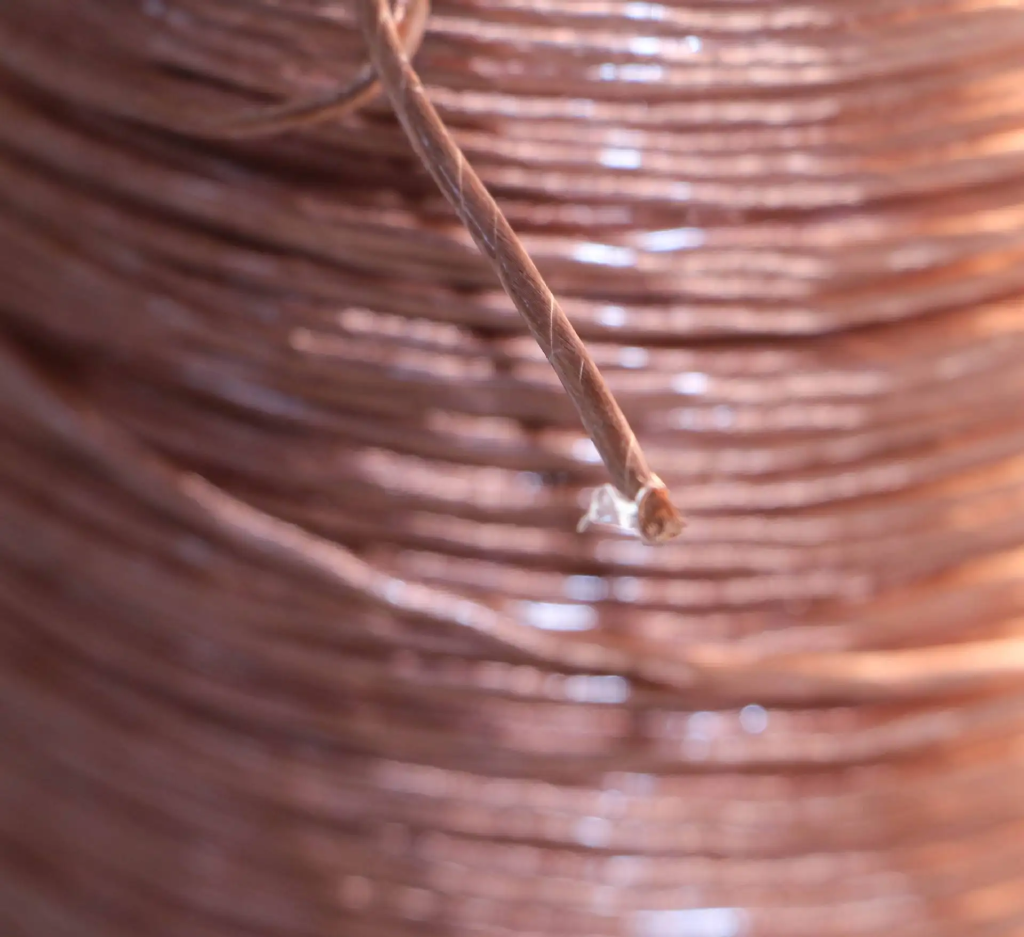
Thin film enameled wire has high temperature and high voltage tolerance and is therefore widely used in high frequency electronic components, transformers, inductors, generators and motors. In these applications, thin film enameled wire provides excellent insulation and chemical resistance, while also reducing coil size and weight.
In addition to polyimide, insulation materials for thin film enameled wire include polytetrafluoroethylene (PTFE), polyetherketone (PEEK), and others. Different insulation materials differ in terms of heat resistance, mechanical properties and chemical resistance, so the film enameled wire should be selected to suit the specific application.
Advantages and characteristics of thin film enameled wire
1、Good high frequency performance.
2, good resistance to high temperature and high pressure performance.
3, good flexibility and resistance to mechanical stress.
4. Good waterproof and insulating oil resistance, suitable for use in sealed environment.
5. Heat resistance temperature and voltage of 130°C (Class B) and 155°C (Class F)
6. Dielectric strength up to 6KV/5MA/1Min
7. Friction coefficient is 1.4-4.13 times higher than ordinary insulated wire
8. Insulation coefficient is better than ordinary insulated wire, production design can reduce the first and second level retaining wall.
Film enameled wire size:
Overlap rate: the ratio of the area covered by the front ring film by the back ring film to the total area during encapsulation, usually 50%, 67% and 75%.
Range of strands: 1~36000 strands (different specifications, depending on the cross-sectional area)
Finished product outer diameter range: 0.25~6mm
Cross-sectional area: 20mm² max
Enameled single wire (nominal diameter of conductor): 0.02~0.50 mm
Due to its high temperature resistance and high insulation, it is widely used in high frequency transformers, high power transformers, magnetic rings, medical devices, inverters, high frequency inductors and transformers, and wireless chargers.


