Thermal Conductivity: Meaning, Materials and Electrical Uses
Thermal conductivity λ is a very large object is a good thermal conductor; and thermal conductivity is a small thermal conductor is a bad conductor or thermal insulator. λ value is affected by the temperature, with the temperature increases and slightly increased. If the temperature difference between the various parts of the substance is not very large, in practical terms for the whole substance can be regarded as λ as a constant. When a crystal cools, its thermal conductivity increases very rapidly.
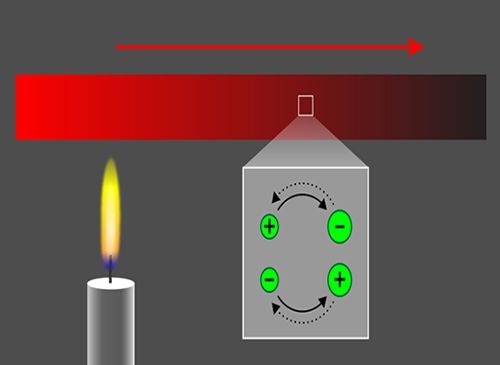
Thermal conductivity is generally not very dependent on pressure, but is greatly affected by temperature. The thermal conductivity of pure metals and most liquids decreases with increasing temperature, with the exception of water; the thermal conductivity of nonmetals and gases increases with increasing temperature. Heat transfer calculations usually take the value at the average temperature of the material. In addition, the thermal conductivity of solid materials with its moisture content, structure and porosity. General moisture content of the material thermal conductivity is large. For example, the thermal conductivity of dry bricks is about 0.27W/(m-K) while the thermal conductivity of wet bricks is 0.87W/(m-K). The thermal conductivity of a substance is usually greater when it is denser. Thermal conductivity decreases when the metal contains impurities, and alloys have a lower thermal conductivity than pure metals. Various types of material thermal conductivity [W / (m – K)] of the general range is: metal for 50 ~ 415, alloys for 12 ~ 120, adiabatic materials for 0.03 ~ 0.17, liquids for 0.17 ~ 0.7, gases for 0.007 ~ 0.17, carbon nanotubes as high as 1000 or more. Diamond has the highest thermal conductivity of any known mineral.
Material Thermal Conductivity
Material State Thermal Conductivity (W/mK)
Graphene Solid (4840±440)-(5300±480)
Diamond Solid 900-2320
Carbon nanotube paper Solid 450-800 Silver
Solid 420 Copper Solid 401 Gold
Solid 318 Aluminum Solid 237 Platinum
Solid 70 Iron Solid 60 Steel
Solid 60 Lead Solid 35 Mercury
Liquid 8.34 Ice Solid
Ceramic Solid 1.22 Glass Solid
Water Liquid 0.6 Polyethylene Solid
0.3 Nylon Solid 0.2 Paraffin Oil
Liquid 0.2 Asbestos Solid
0.2 Polystyrene Solid
0.08 Cork Solid 0.05
Data at standard conditions are used. For gases, values correspond to cp.


