Three-Phase Transformers: Structure and Power System Uses
A three-phase transformer is an electrical device used to change the three-phase AC voltage, which consists of three separate single-phase transformers connected by magnetic coupling. Three-phase transformers are commonly used in high-voltage transmission and distribution systems in power systems, as well as in various applications in industry.
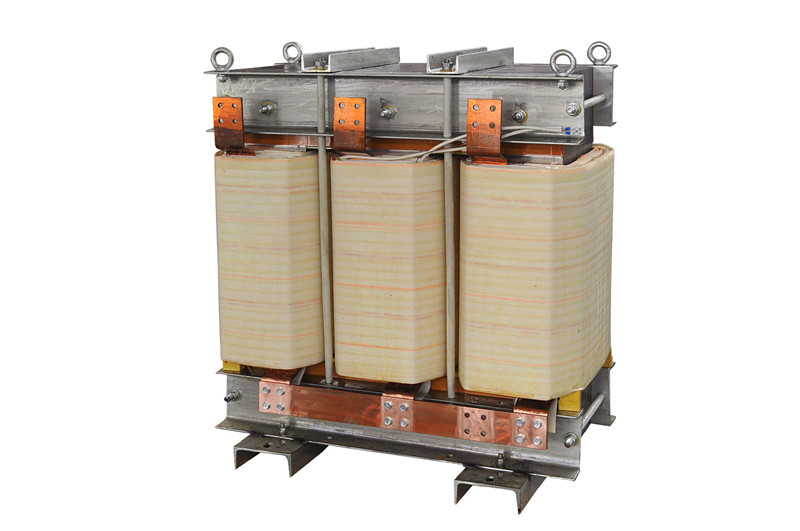
The following are the details of three-phase transformers:
- Core: The core of a three-phase transformer is usually made of iron cores or silicon steel sheets, similar to that of a single-phase transformer. The core provides a low reluctance path that allows the flux coils (windings) to efficiently transfer the magnetic field.
- Windings: A three-phase transformer contains three windings, the main winding, the secondary winding and the neutral winding. The main winding is connected to the input supply, the secondary winding is connected to the output load and the neutral winding is used to connect the neutral point. The main winding and the secondary winding are connected to each other through magnetic coupling to form the three phases of a three-phase transformer.
- Input and output voltages: The input voltage of the main winding is called the main-side voltage, and the output voltage of the secondary winding is called the secondary-side voltage, and they are all three-phase voltages. The phase relationship between the input voltage and output voltage is determined by the three-phase power supply, usually 120 degrees or 180 degrees phase difference.
- Transformer ratio: The transformer ratio of a three-phase transformer defines the proportionality between the main side voltage and the secondary side voltage, similar to a single-phase transformer. The transformation ratio determines the step-up or step-down function of the transformer.
- flux coupling: the energy transfer between the main winding and the secondary winding is realized by the coupling effect of the magnetic field. When the current in the main winding changes, the resulting magnetic field passes through the core and is transferred to the secondary winding through magnetic coupling. This change in magnetic field produces an induced electromotive force in the secondary winding, thus realizing voltage transformation.
- Iron and copper losses: Three-phase transformers also have iron and copper losses, similar to single-phase transformers. Iron losses are energy losses due to hysteresis and eddy currents in the core, while copper losses are energy losses due to resistance in the main and secondary windings.
- Efficiency: The efficiency of a three-phase transformer is defined as the ratio of output power to input power, similar to that of a single-phase transformer. Efficiency is usually up to 90% or more, depending on the design of the transformer and the load conditions.
- Insulation: Insulation is also very important due to the high voltages and currents present in three-phase transformers. Insulating materials are used to isolate the windings and core to prevent current leakage and arcing faults.
Three-phase transformers play a key role in power systems and are used in applications such as voltage transformation, power distribution and power transmission. They offer high efficiency, reliability and low losses to meet the demands for electrical energy in industrial and commercial applications.


