Wire Winding: Structure, Methods and Electrical Applications
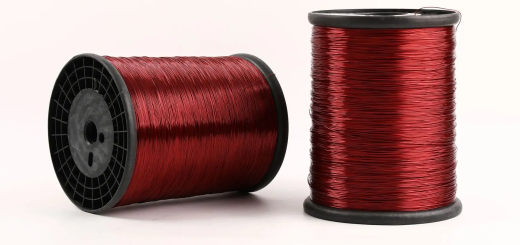
A lead winding is a coil structure in which wires are wound in a specific way in electrical equipment or electromagnetic devices. Lead wire windings are widely used in electrical equipment such as motors, transformers, generators, inductors, and electromagnetic relays. Here is some basic information about wire windings:
Type of winding:
- Stator Winding: fixed to the stator of an electric motor or transformer to provide the main magnetic field or electromagnetic induction.
- Rotor Winding: Mounted on the rotor of a motor or generator to produce a rotating magnetic field or to transmit electrical energy.
- Auxiliary windings: additional windings that are used for specific functions such as regulating inductance, reducing harmonics, etc.
Type of wire:
- Wire: Wire windings often use copper or aluminum wire as the conductor material, due to its good electrical and thermal conductivity properties.
- Insulation: The wire is usually covered with insulating materials, such as insulating varnish, insulating paper, or insulation, to prevent short-circuiting of the current or breakdown of the insulation. Winding Method:
- Planar winding: the wire is wound along the plane or parallel to the surface of the device, commonly used in the stator winding of electric motors.
- Cylindrical winding: the wire around the column winding to form a cylinder, commonly used in motor rotor winding.
- Splice Winding: Multiple wires are combined together by splicing or connecting to meet current and voltage requirements.
Cladding & Insulation:
- Windings usually need to be clad with an insulating material, such as insulating paper, varnish or insulation, to provide electrical insulation and protection.
- The cladding also provides mechanical strength and protects the wire from external environmental factors. Coil Shape:
- Conductor windings can be made in different coil shapes, such as round, oval, rectangular, etc., to accommodate different electromagnetic requirements and assembly spaces.
Winding design:
- The design of the winding needs to consider factors such as current capacity, voltage level, power loss, magnetic field distribution, and temperature rise.
- The design of the winding also needs to meet the requirements of the equipment, such as mechanical dimensions, electromagnetic compatibility and heat dissipation performance.
The design and manufacture of conductor windings is one of the important process aspects of electrical equipment. It has an important impact on the performance, efficiency and reliability of the equipment. In practical applications, the design, manufacture and installation of wire windings need to be carried out according to the requirements and design guidelines of specific equipment.