Hard vs Soft Copper Core Wire: Conductivity and Use Cases
The main differences between hard and soft copper core wires are their electrical conductivity and mechanical strength.
The conductivity of hard copper core wire is higher than that of soft copper core wire due to the fact that hard copper core wire has a tighter copper core, so electrons can be transmitted through the core more easily. Also, the copper core of hard copper core wire is often specially treated, such as cold drawn or drawn, to increase its hardness and strength. This makes hard copper core wire more durable and wear-resistant than soft copper core wire.

Hard wire is a single-stranded thicker kind of wire, while the soft wire is a multi-stranded composition of a whole kind of wire, as described below:
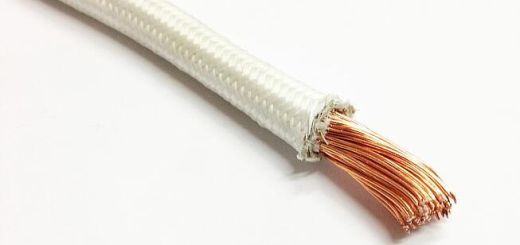
-Flexible wire: a conductive solid metal wire stranded by multiple strands of less than 1 mm in diameter.
-hard wire: more than 1 mm in diameter conductive solid metal of a single wire.
Hard wire below 10 square is generally a single stranded wire, household wires are generally no more than 6 square. As can be seen from the difficulty of the production process, the same square of soft wire is more expensive compared to hard wire.
-Soft wire is weak in tensile strength (resistance to longitudinal stretching) and strong in fatigue resistance (resistance to transverse breakage).
-Hard wire is stronger in tensile strength (resistance to longitudinal stretching) and weaker in fatigue resistance (resistance to lateral breakage).
The difference in mechanical properties determines that each of the two types of wire is suitable for different scenarios.
Soft copper wire is weak in tensile strength (longitudinal stretch resistance), which makes it unsuitable for buried walls, buried floors, buried pipes, because in such scenarios, we need to pull the pipeline operation, in the process will cause some of the copper wire in the soft wire is pulled off, laying hidden problems for future use.
The high fatigue resistance (resistance to lateral breakage) of soft copper wire determines its suitability for operating scenarios requiring flexible connections, such as elevator cables, overhead crane cables, electric vehicle charging wires, charging cables for cell phones – in these applications, the wire needs to be bent frequently to produce corresponding changes in curvature, requiring high fatigue resistance for the wire . Accordingly, hard copper wire is suitable for permanent operating scenarios such as buried walls, floors, and pipes, where it is used as the main wire, and hard copper wire is not suitable for operating scenarios that require frequent bending.
Soft copper core wires have a lower conductivity, but they are softer and easier to bend and flex. This makes soft copper core wire suitable for applications that require frequent bending, such as cables and wire harnesses. In addition, soft copper core wires are usually cheaper than hard copper core wires.
Hard copper core wire is suitable for applications requiring high current transmission and high mechanical strength, while soft copper core wire is suitable for applications requiring frequent bending and lower cost.