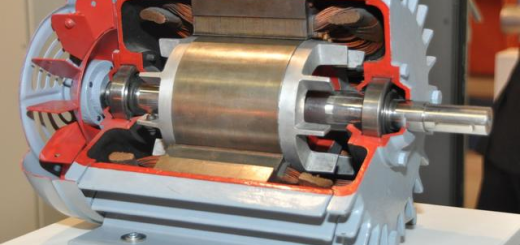
How to Measure the Internal Temperature of a Winding
Measuring the internal temperature of windings (e.g. transformers, motors, etc.) is a critical monitoring task and can be carried out using the following methods:
Thermistors or thermistors: these temperature sensors work on the principle that resistance changes with temperature. The thermistor is fixed on the surface or inside the winding, and when the temperature rises, the resistance value changes accordingly, and the change in temperature can be inferred by measuring the change in resistance value. pTCs usually show a significant change in resistance when the winding temperature exceeds a certain threshold, while NTCs show a decrease in resistance value when the temperature increases.
Thermocouple: A thermocouple is a sensor consisting of two different metal wires. One metal wire is soldered or fixed inside the winding and the other wire is led out for measurement. When the temperature of the winding changes, the temperature difference between the two metal wires will produce a potential difference, through the measurement of the potential difference can be derived from the information of the temperature change.
Infrared thermometry: Infrared thermometry utilizes the relationship between infrared radiation emitted by an object and its temperature to measure temperature. By aiming the infrared thermometer at the surface of the winding, the temperature of the winding can be measured non-contact. This method is suitable for measuring the surface temperature of the winding, but cannot directly measure the internal temperature.
COIL THERMOMETER: A coil thermometer is a device designed to measure the temperature of a winding. It usually consists of one or more sensors, these sensors can be installed in or near the winding. The coil thermometer accurately measures the internal temperature of the winding and provides real-time temperature monitoring.
Selection of the appropriate method depends on the specific application needs, measurement accuracy requirements and feasibility. When performing winding temperature measurements, a suitable temperature sensor should be selected based on the actual situation and ensure that the sensor is installed in the correct location and manner to obtain accurate and reliable temperature data. Attention should also be paid to the sensor’s operating range, response time and environmental adaptability to ensure the accuracy and reliability of the measurement results.