AC Winding: Connection, Magnetic Potential and Motor Performance
An AC winding is a type of winding used in an AC motor that differs in structure and principle from the winding of a DC motor. AC windings usually use multiple coils, which are wound around the core of the motor to form a toroidal circuit for generating a rotating magnetic field to turn the motor.
AC windings are usually divided into three types: single-phase windings, two-phase windings and three-phase windings. Single-phase windings are windings with only one phase and are usually used in small household appliances, such as electric fans and power tools; two-phase windings consist of windings with two phases and are usually used in some medium power motors, such as air conditioning compressors and water pumps; three-phase windings consist of windings with three phases and are usually used in large industrial motors.
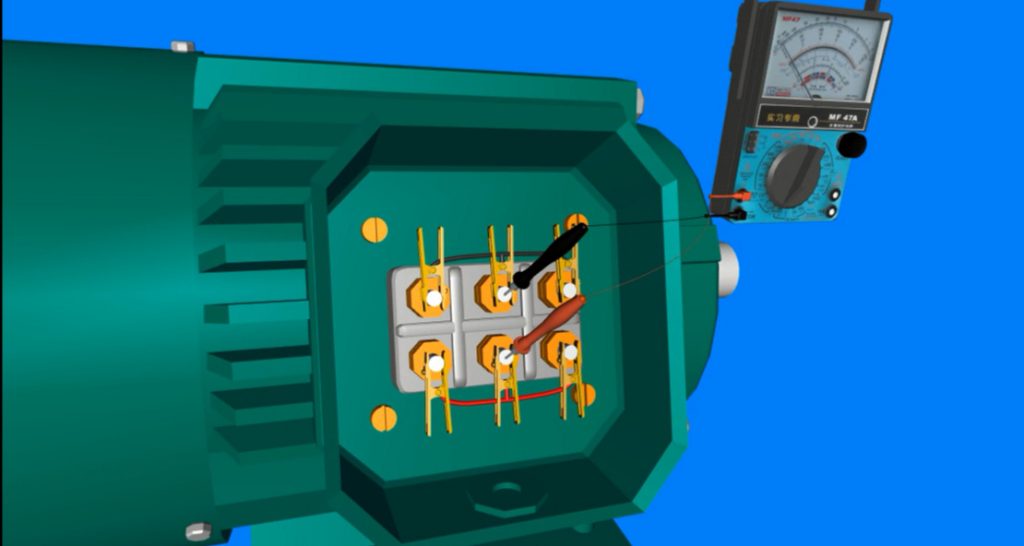
AC winding is the connection of the conductors (effective sides) in each slot according to the principle of superposition of potentials to form a multiple symmetrical circuit. First of all, an important conclusion is emphasized: the electrical and magnetic potentials generated by the AC winding and the electromagnetic properties that are eventually manifested are only related to the connected conductors and not to the order of connection. In other words, as long as the connection is the same as the conductor in the slot, it does not matter which one is connected first and which one is connected second, the final embodiment of electromagnetic performance is basically the same, only the end is different, there may be slightly different end leakage resistance and DC resistance. Specific connection principles are as follows:
① Principle of maximum potential superposition
Under a certain number of conductors, the synthesized fundamental (working wave) potential and magnetic potential are the largest. Specifically, the maximum potential and magnetic potential of the fundamental wave synthesized by two coil sides of a single coil; the maximum potential and magnetic potential of the fundamental wave synthesized by each coil in series and each coil group in series.
② Principle of minimum non-operating harmonics
The non-working harmonic component of the potential and magnetic potential generated by connecting the windings should be as small as possible. For the winding with sine wave, the potential and magnetic potential should be as close to sine as possible; for the winding with square wave, some harmonics may also be working waves, and these harmonics will also produce effective torque, which can be unrestricted, but some harmonics are non-working waves, and these non-working harmonics should be minimized when the winding is connected.
③ Symmetry principle
The spatial arrangement of multi-phase windings should be symmetrical; the potential and magnetic potential generated by each phase winding should be symmetrical; the number of slots occupied by each phase winding and the number of conductors connected in series should be equal, and the resistance and reactance of each phase should be balanced. A necessary condition to satisfy the symmetry principle is that the total number of slots of the armature must be divisible by the number of phases, i.e. Z1/m=integer.
④ Principle of processability
Since the potential and magnetic potential generated by the winding are only related to the connected conductors, and not the connection order, which conductor is connected first and which conductor is connected later depends on the process and economy, with the principle of easy and convenient process, troubleshooting and maintenance.
⑤ Principle of economy
Since the conductors can be connected in any order, the winding should be connected in such a way that the end of the winding is as short as possible to save the amount of copper used at the end and reduce the copper consumption at the end.
Some of the above principles may be contradictory to each other, and may not even be satisfied at the same time under certain constraints, which requires a trade-off according to the specific situation and the main factors.
The design and manufacture of AC windings requires consideration of a variety of factors, such as motor power, voltage, frequency, etc., to meet the operating requirements of the motor. When designing AC windings, it is necessary to select the appropriate wire material and insulation material, and design the appropriate winding structure and wiring method to ensure the efficiency and performance of the motor according to the operating conditions of the motor.