Distribution Transformer: Purpose and System Role
A distribution transformer is a piece of equipment used in power systems to transform the voltage level of power in order to achieve efficient transmission and distribution of energy during the transmission and distribution of power. Here are some details of distribution transformer:
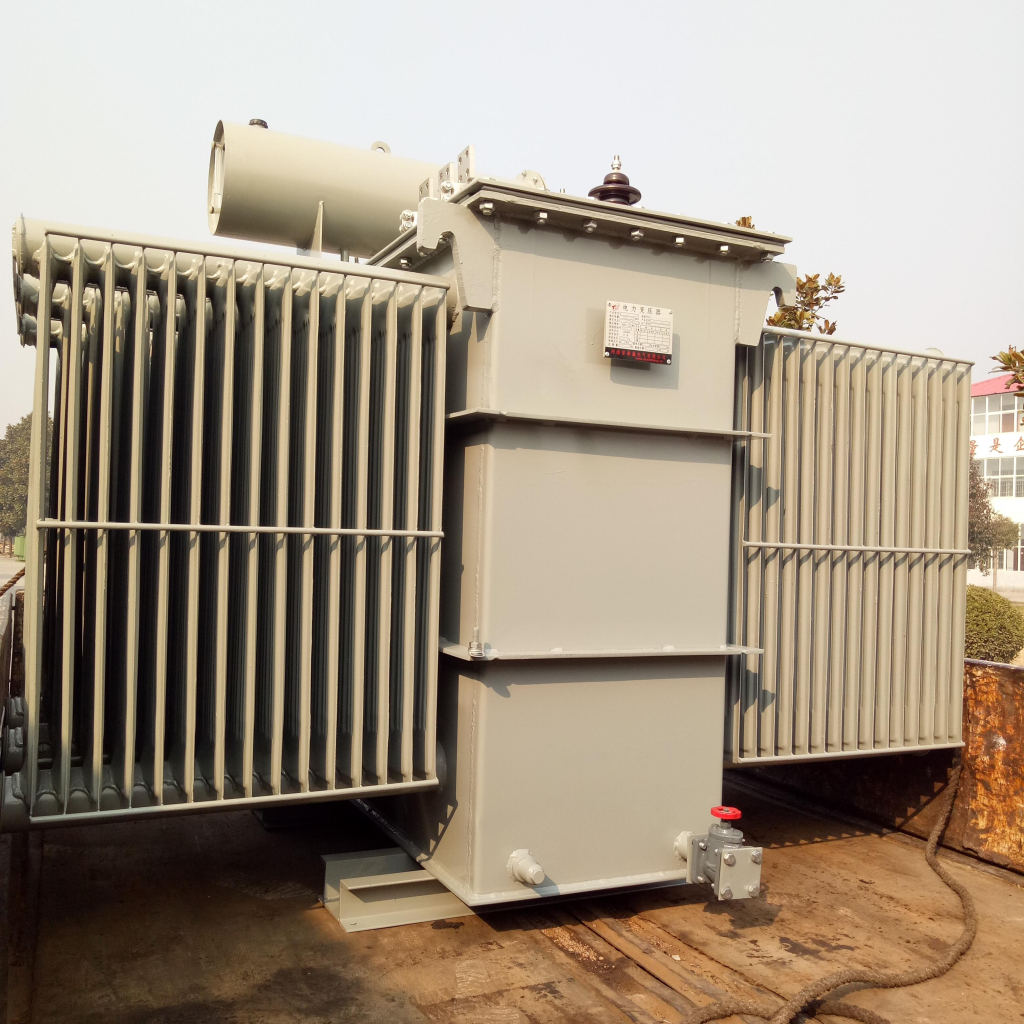
- structure and composition:
Core: The core of a distribution transformer is made of highly permeable material, usually silicon steel sheet. The core is designed to improve the efficiency of the magnetic circuit and reduce magnetic losses.
COIL: The distribution transformer consists of a high voltage side coil and a low voltage side coil. The coils are wound from electrically conductive materials (usually copper or aluminum) and they are connected through the core. The high voltage side coil is used to receive the input power while the low voltage side coil outputs the transformed power. - Principle of voltage conversion:
Input side (high voltage side) : When current is passed through the high voltage side coil, a magnetic field is generated in the iron core.
Output side (low voltage side): through magnetic induction, the magnetic field in the iron core will induce the voltage in the output side coil.
Transformer ratio: The transformer ratio of a distribution transformer defines the proportionality between the input voltage and the output voltage. The transformer ratio is determined by the turns ratio of the coil winding. - Rated capacity and parameters:
Rated capacity: the rated capacity of a distribution transformer is the maximum power it can carry. The common unit of rated capacity is kilovolt ampere (kVA), which is used to indicate the capacity of the transformer.
Rated voltage: distribution transformers have input-side and output-side rated voltages. The input side rated voltage refers to the input voltage level of the transformer and the output side rated voltage refers to the output voltage level of the transformer.
Frequency rating: Distribution transformers are usually designed for a specific power system frequency, such as 50 Hz or 60 Hz. - protection and control:
TEMPERATURE PROTECTION: Distribution transformers are usually equipped with temperature protection devices to monitor the temperature of the transformer and prevent overheating.
Short-circuit protection: To protect the transformer from short-circuit currents, short-circuit protection devices such as fuses or circuit breakers are usually installed.
Cooling system: large distribution transformers are usually equipped with a cooling system, such as a cooling fan or cooling oil, to maintain the normal operating temperature of the transformer. - Installation and maintenance:
Installation location: Distribution transformers are usually installed in power transmission and distribution stations, industrial facilities or inside buildings to provide power supply as needed.
Maintenance: Regular maintenance is essential for the proper operation of distribution transformers. Maintenance includes inspection of the cooling system, insulation, wiring and electrical connections, etc., as well as regular oil cleaning and insulation testing.
They play an important role in the power system, ensuring reliable transmission and distribution of power to meet the needs of a wide range of users.