How Flat-Wire Motors Are Wound in 800V Architectures
The application of 800V high-voltage platform and flat wire winding process will definitely lead to the development of motors in the direction of high power and high speed. Especially in the application of Hairpin winding motors, due to the skin effect and eddy current heat loss, not only to reduce the overall efficiency of the motor, the motor long time in the high temperature environment is prone to demagnetization of magnets, aging of insulating materials, as well as reduce the service life of gearboxes and other drive units.
In the 800V architecture, the winding method of flat wire motors may be different from that of traditional low voltage architecture motors. Since 800V architectures are typically used for high-voltage, high-power applications, the motor design needs to take into account voltage levels and current requirements.
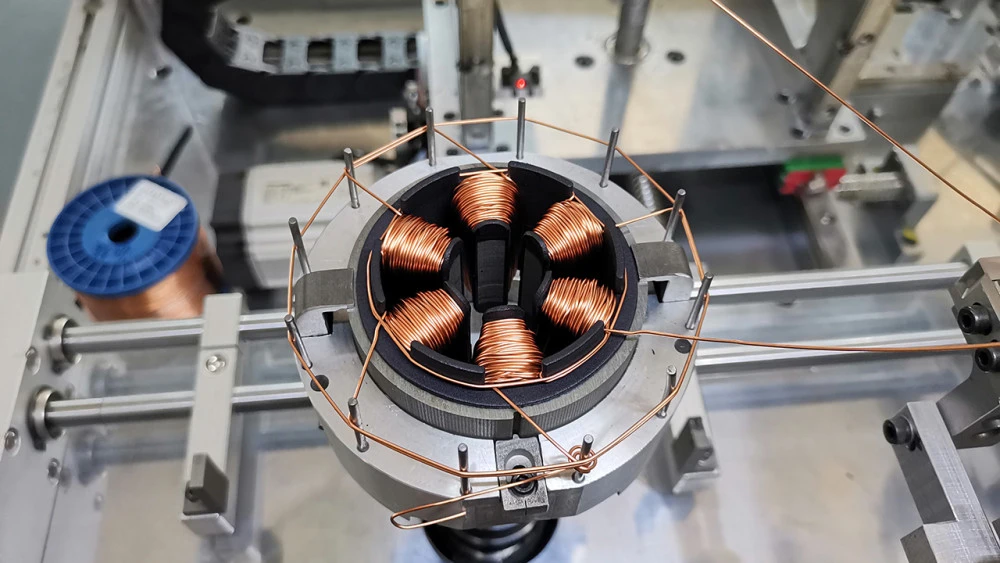
- Design the winding architecture: Determine the power requirements of the motor, the current loading of the windings, and the specifications of the winding material. Based on these requirements, design the number of layers, turns and wire size of the winding.
- Select Flat Wire Conductors: Select flat wire conductors suitable for 800V high voltage applications. Flat wire conductors usually have high insulation and high temperature resistance characteristics to meet the safety requirements of high voltage environments.
- Stator Winding: Wind the flat wire conductors in the stator slot according to the design requirements. Due to the shape of the flat wire conductor, special winding process and equipment are usually required to ensure that the conductor can be evenly and firmly wound in the stator slot.
- Insulation treatment: After completion of the winding, the windings are insulated to ensure insulation between the windings and against the stator slot walls. This can be accomplished by applying insulating varnish, using insulating materials, or other insulating techniques.
- Lead wire connections: Lead the flat wire conductors for each phase and connect them to the motor’s lead-in terminal block, harness, or connector. Ensure that the lead wire connections are strong and reliable and follow the correct phase sequence and wiring.
Winding flat wire motors requires specialized motor design and manufacturing experience to ensure compliance with safety and performance requirements for 800V high voltage environments. In addition, specific winding methods and processes may vary depending on the motor manufacturer and specific application. Therefore, it is best to consult with a professional motor manufacturer or engineer during the actual design and manufacturing process to ensure proper winding and performance of the motor I have a mistake, when using 800V architectures, the winding method has little to do with the voltage rating of the motor. The winding method depends on the design requirements and application needs of the motor, not the voltage rating of the motor.


