DC Generator: Working Principle, Structure and Applications
A DC generator is a device that converts mechanical energy into DC electrical energy. It is mainly used as a DC motor required for DC motors, electrolysis, electroplating, electrometallurgy, charging and excitation of AC generators. Although power rectification elements are also used where DC power is needed to turn AC power into DC power, DC motors are not yet comparable to AC generators in terms of ease of use, reliability of operation and certain work performance. DC generators have better potential waveforms and less electromagnetic interference.
Structure
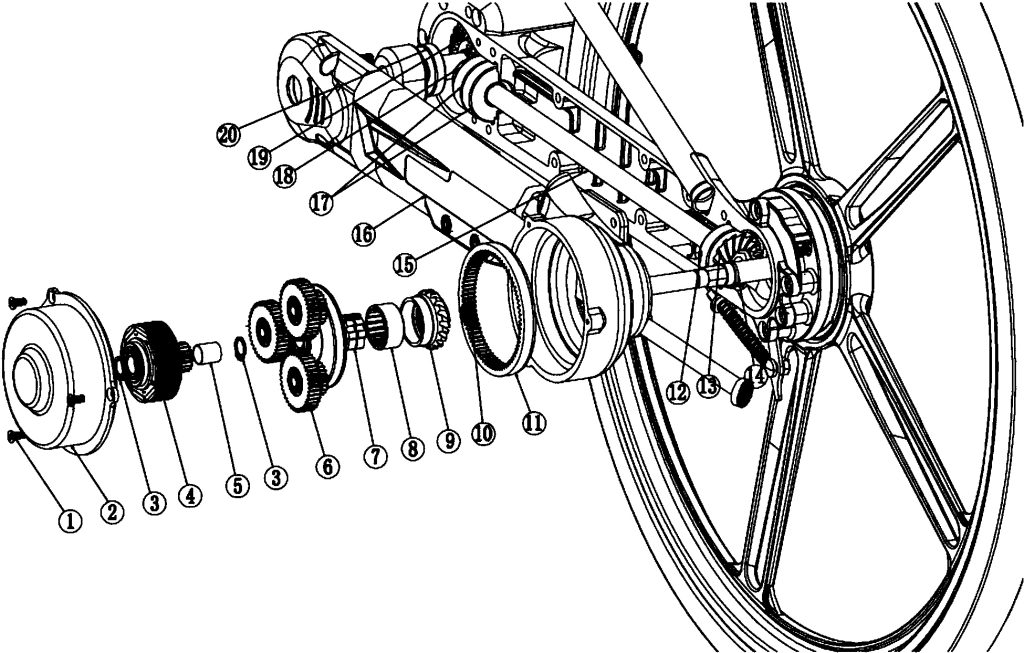
The structure of a rotating motor must have a structure that meets both electromagnetic and mechanical requirements, and the rotating motor must have both static and rotating parts.
1. The stationary part of a DC motor is called the stator
Function – generate magnetic field
Composed of main pole, commutation pole, seat and brush device, etc.
2. The rotating part of the DC motor is called the rotor (usually called the armature)
Function — Generate electromagnetic torque and induced electric potential
Consists of armature core and armature winding, commutator, shaft, fan, etc.
Stationary part
2. Commutation pole (also known as additional pole or inter-pole)
Function – to improve commutation
The commutation pole is installed between the two main poles and is also composed of the core and winding
The core is generally machined from a single piece of steel or steel plate; the commutation pole winding is connected in series with the armature winding
3. Machine base The machine base is usually made of cast iron or thick iron plate welded together, and has two roles:
Fixed main pole, commutation pole and end cover
As part of the magnetic circuit. The part of the base through which the magnetic flux passes is called the magnetic yoke.
4. Brush device
Role – to bring in or draw out DC voltage, DC current
Consists of brush, brush grip, brush holder and copper wire braid
Rotating part
1. Armature core Two purposes:
As the main part of the main magnetic circuit Embedded armature winding, usually made of 0.5mm thick silicon steel sheet punching laminated
- Armature winding
The main circuit part of DC motor, used to generate electric potential by current and induction to achieve electromechanical energy conversion, consists of a number of coils connected according to certain rules, components and embedded method
DC motor is an important part, the role of the brush will be passed on the DC current into the winding of the alternating current or the winding of the alternating electric potential into the brush end of the DC electric potential.
The magnetic pole is a fixed part of the generator and usually consists of a set of permanent magnets or excitation coils. These permanent magnets or excitation coils produce a magnetic field that interacts with the wires in the armature to induce an electric potential in the armature.
The collector is the part that connects the armature to the external circuit and usually consists of a set of brushes and a collector ring. As the armature rotates, the brushes come into contact with the collector ring, thus outputting the electric potential in the armature to the external circuit.
The output voltage and power of a DC generator depend on the rotation speed of the armature, the strength of the magnetic field, and the number and shape of the wires. In order to maintain a stable output voltage and power, a regulation system is usually required to control the excitation current and the rotation speed of the armature.
DC generators are used in a wide variety of applications, including electric motors, electric vehicles, ships, aircraft, and generator sets.